100 Years

Portsmouth - Fishbourne

Celebrating 100 Years of Portsmouth - Fishbourne

On 15 March 1926, the first vehicle ferry crossed between Portsmouth and Fishbourne – and a new chapter began. A century on, we’re celebrating 100 years of innovation, community and continuity on a route that has helped shape daily life on the Island. From reuniting families and supporting local businesses, to welcoming visitors, this connection across the Solent has become part of the Island’s story.

This anniversary isn’t simply about looking back. It’s a statement of endurance, trust and evolution, and a chance to recognise the role this route continues to play today.

To mark the milestone, we’ll be hosting a special heritage sailing, unveiling a large scale printed timeline charting key moments from the past 100 years, sharing a dedicated video telling the story of the route, and bringing memories to life across social media with images and stories from colleagues and customers.
The Story of the Isle of Wight Ferry Route

Watch our short film to explore the journey behind the route and see how it became a lifeline for so many.

Timeline

From its earliest days to the modern service we know today, discover the milestones that shaped this vital link across the Solent in more detail below.

5 April 1825

Steam vehicle services begin operating between Portsmouth and Ryde, with horse-drawn carriages and livestock carried in wooden tow boats pulled by tug steamers.

Sailings run from George Street Slipway on Ryde Esplanade to Broad Street Slipway in Portsmouth.

PS Union enters service first, followed two months later by PS Arrow. PS Lord Yarborough joins the fleet in 1826, with PS Earl Spencer added in 1833.

1912

742 cars had been shipped between Portsmouth and George Street in Ryde. The service had also increased to 26 sailings a day with a further six steamers in service.

1925

The Southern Railway Company purchases two acres of land from the Fishbourne Farm Estate to prepare for an ‘improved landing place’, which will enable the company to start a fixed timetable from Wootton Creek. Work starts in March that year. 1925 was the last full year of service for tow-boat operations between Portsmouth and Ryde Esplanade before moving to Fishbourne. Nearly 2,000 cars were carried on this service in this year.

15 March 1926

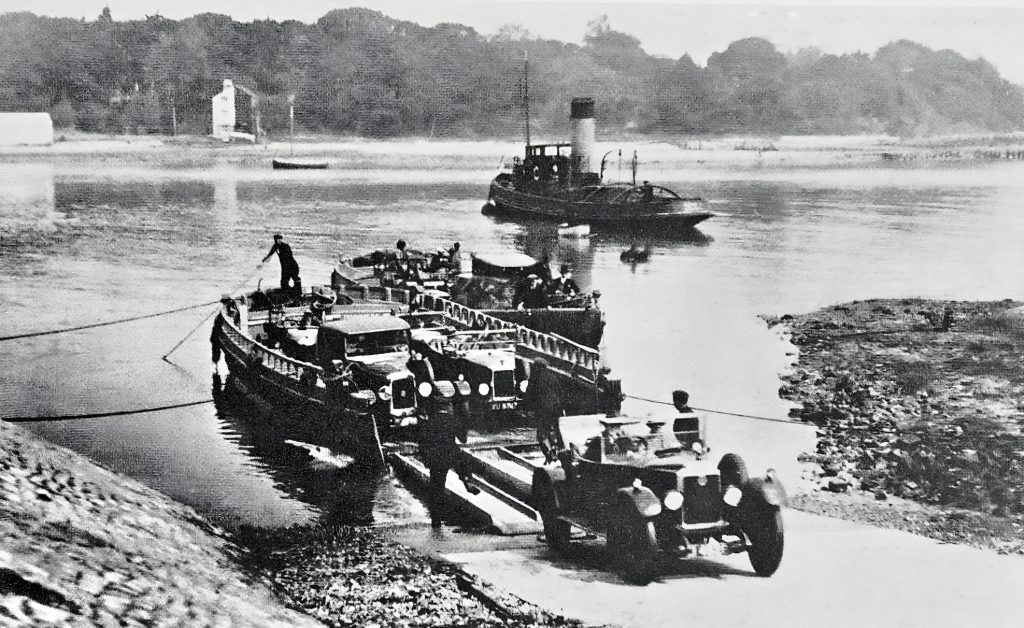
Black and white photo of wooden tow-boats carrying vintage cars being pulled across the water by a tug at Fishbourne in 1926.
Image credit: John Hendy

The service is officially transferred to Fishbourne using tug Adur ll to pull three wooden tow-boats. The Portsmouth slipway remains at Broad Street.

August 1926

Over 4,000 cars use the new Fishbourne link – more than in the whole of 1925.

December 1926

Designs are sought for a motor ferry to replace the tow-boat service.

July 1927

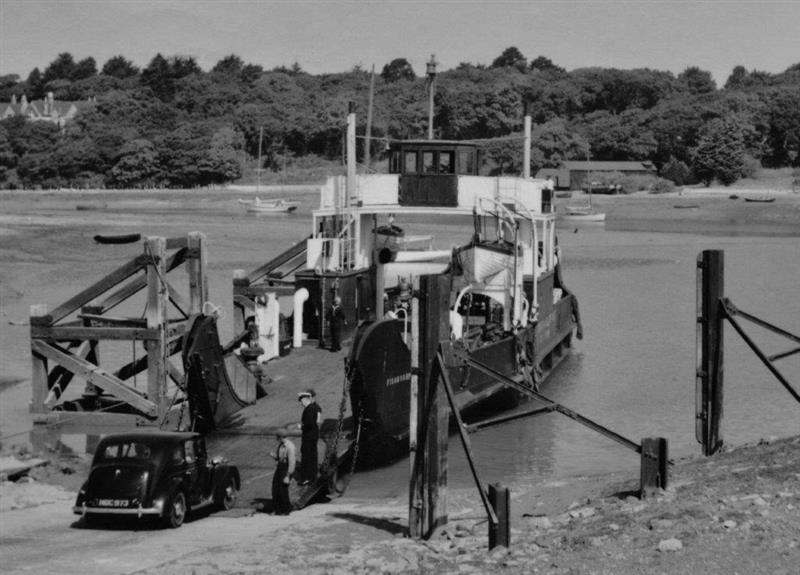
Black and white image of MV Fishbourne loading a car via hinged bow ramps at a slipway, with crew assisting at the water’s edge.
Image credit: John Hendy

The MV Fishbourne enters service, costing £13,254 to build. She carries up to 16 cars and 100 passengers, with a crossing time of 55 minutes.

June 1928

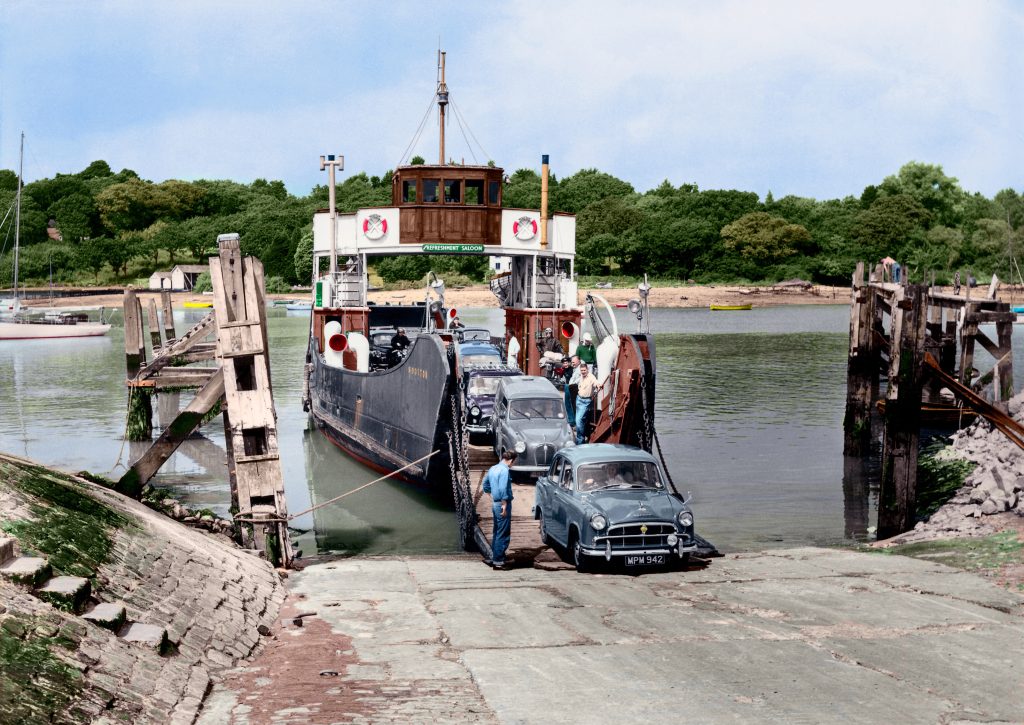
Colourised historic image of MV Wootton unloading 1950s cars down a slipway at Fishbourne, with crew guiding vehicles ashore.
Image credit: John Faulkner

Following the service’s success, a second vessel is purchased. The MV Wootton enters service, carrying up to 16 cars and 100 passengers.

1929

Almost 13,000 cars are carried on 15 trips a day during the summer.

June 1930

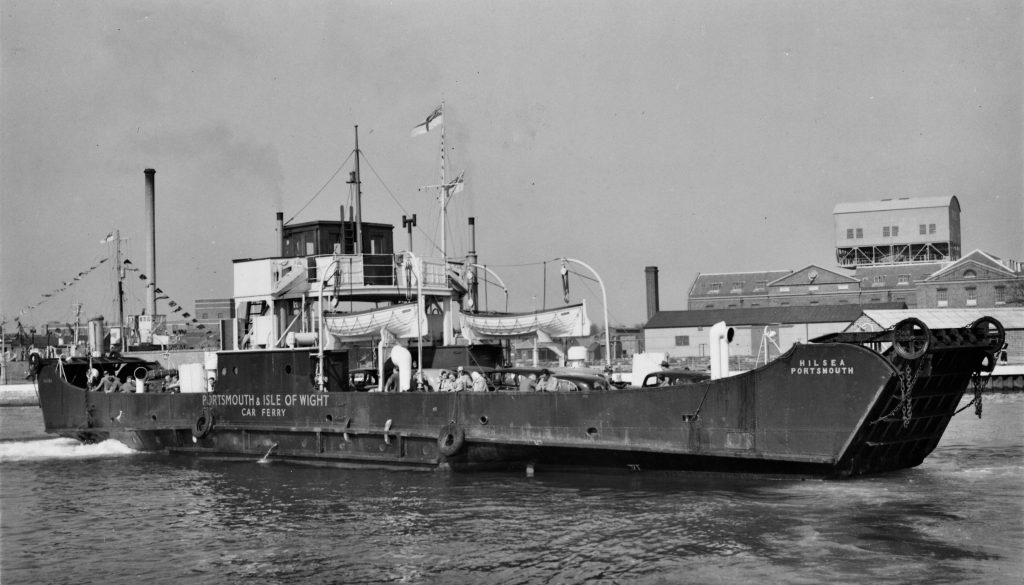
Historic car ferry Hilsea docked in Portsmouth, with passengers and vehicles visible on deck and “Portsmouth & Isle of Wight Car Ferry” painted on the hull.
Image credit: John Hendy

The MV Hilsea enters service, carrying up to 16 cars and 100 passengers.

1939 (World War 2)

The three ferries are painted grey and given reinforced wheelhouse roofs.

1940 (World War 2)

MV  Fishbourne & MV Wootton are sent to Ramsgate to assist with Operation Dynamo (Evacuation of Dunkirk) in June.

1941 (World War 2)

Large areas of Portsmouth are ‘Blitzed’. With the Isle of Wight ‘closed’ to visitors, a reduced service continues carrying large quantities of military equipment.

1944 (World War 2)

The Isle of Wight reopens for business as travel restrictions are lifted.

1945 (World War 2)

The first full year of normal service sees 7,371 cars and 24,819 passengers carried.

1948

Nationalisation of the railway – British Rail is formed.

1950

The end of petrol rationing brings a revival in traffic.

1959

Austin ‘mini’ launched, and the first section of the M1 is opened. The age of the motor car has dawned.

July 1961

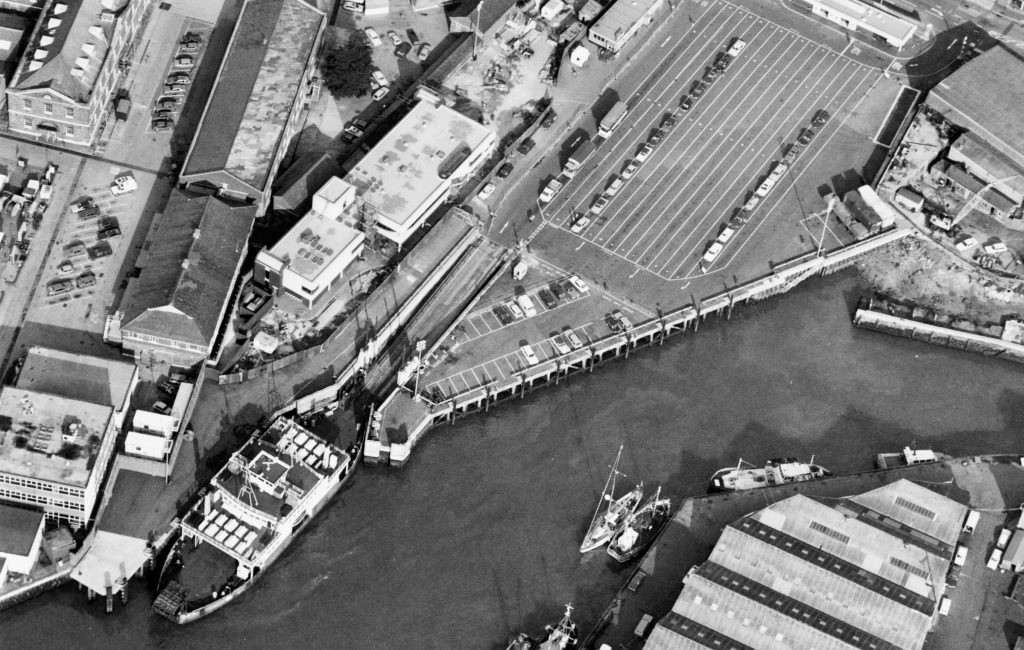
Aerial black and white view of the Gunwharf terminal in Portsmouth, showing ferry berths, parked cars and surrounding dockyard buildings.
Image credit: John Hendy

In July, a new mainland terminal opens at Camber Docks in Portsmouth, with space for 120 cars. Fishbourne is also upgraded with a new slipway.

MV Fishbourne enters service, carrying 34 cars and 165 passengers.

August 1961

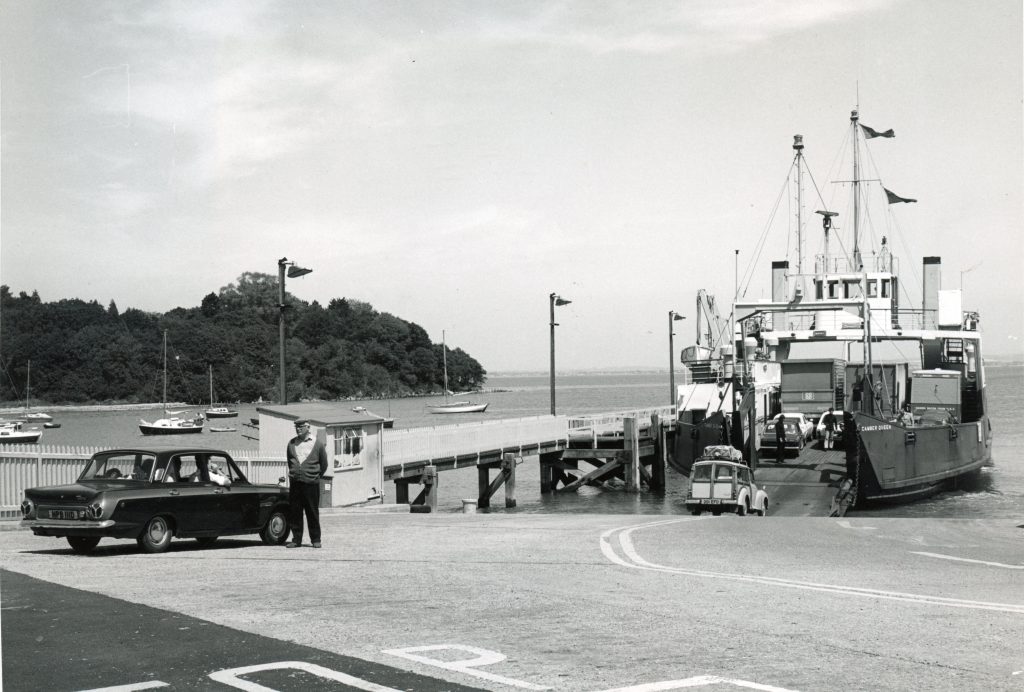
Black and white photograph of MV Camber Queen loading cars at a slipway, with vehicles driving on board and a crew member standing beside a parked car near the pier.
Image credit: John Hendy

The second ship, MV Camber Queen, enters service.

1963

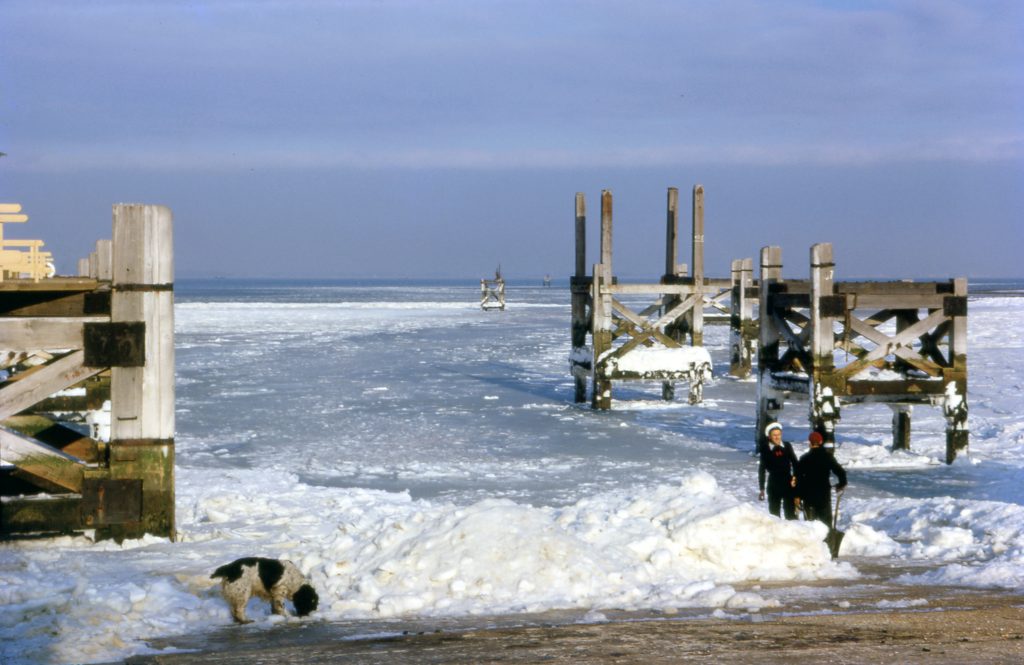
Night sailings are introduced. Services had to operate between Portsmouth and Yarmouth for 1 day on 29th January due to floating ice obstructing Fishbourne.

Winter scene at Fishbourne showing frozen sea ice around wooden ferry berths, with two people and a dog standing on the icy shoreline.
Image credit: Cliff Matthews

During the infamous Winter of ’62/’63, Captain Jim Blanch recalls sea freezing along parts of the coast, with the channel into Fishbourne completely iced over, forcing the route to be suspended.

“Incidentally, I was eight years old at the time. At that time we did not have central heating. One can only imagine the freezing temperatures and inadequate heating aboard those ferries that Winter.” – Captain Jim Blanch

July 1969

The new MV Cuthred, carrying 48 cars and 400 passengers, enters service with greatly improved passenger accommodation.

1970

Simple teal “Sealink” wordmark on a plain background.

British Rail shipping division trades as ‘Sealink’.

In the late 1970s, a night service operated from Camber Dock on a triangular route between Portsmouth Harbour, Ryde Pier Head and Fishbourne. With foot passenger numbers falling and costs increasing, vessels berthed at all four ports to remain viable.

“On the 22:45 sailing from the Camber, the car ferry would berth alongside one of the Portsmouth to Ryde passenger ferries at Harbour Station to embark passengers for Ryde. She would then sail for Fishbourne via Ryde Pier and return to the Camber at 01:30, with the next sailing from Fishbourne at 03:00.” – Captain William (Bill) Frampton

July 1972

New and improved facilities for motorists are provided at Fishbourne.

July 1973

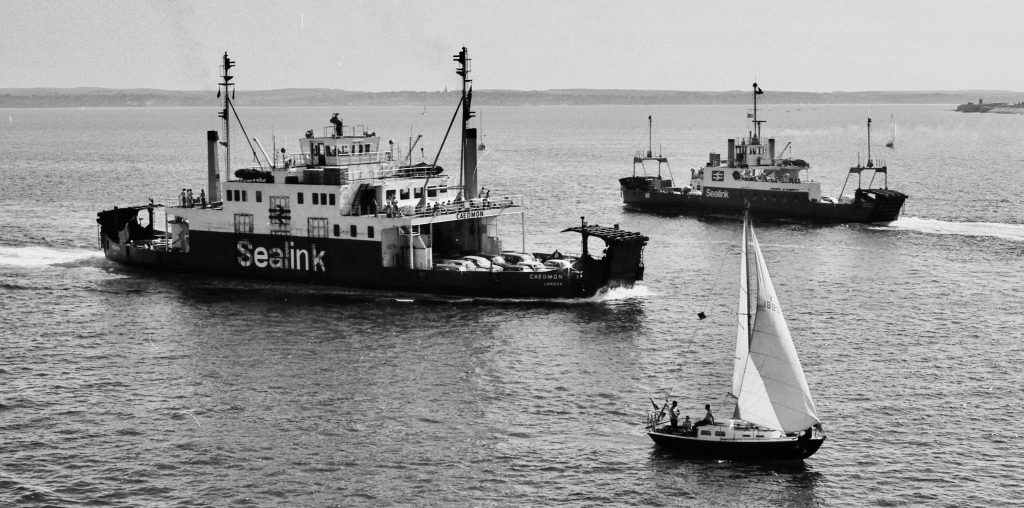
Black and white image of Sealink ferries including Caedmon sailing in the Solent, with a yacht in the foreground.
Image credit: John Hendy

The MV Caedmon enters service, carrying 52 cars and 756 passengers. The route can now provide a four-ship service.

1977

MV Cuthred and MV Caedmon are both fitted with Mezzanine Decks, increasing car capacity by 24.

1979

A four-year modernisation programme is announced, including a large investment in land at Gunwharf Quays and the introduction of two new super ferries. Slipways are set to be replaced by linkspan operations.

February 1982

Mike Bridgman worked in the Ticket Office in 1982. He was the last Clerical Officer on duty at Broad Street to see the last ferry to leave the slipway at 23:00 on a cold Monday night in February. Mike was also the first Clerical Officer to open the then-new Gunwharf Terminal. He remembers selling tickets for the MV St Catherine’s first sailing at 06:00 on a Tuesday morning. – recalled by Mike Bridgman

June 1982

A new Gunwharf port, with space for 235 cars and 17 lorries is opened by Lord Mayor of Portsmouth.

1983

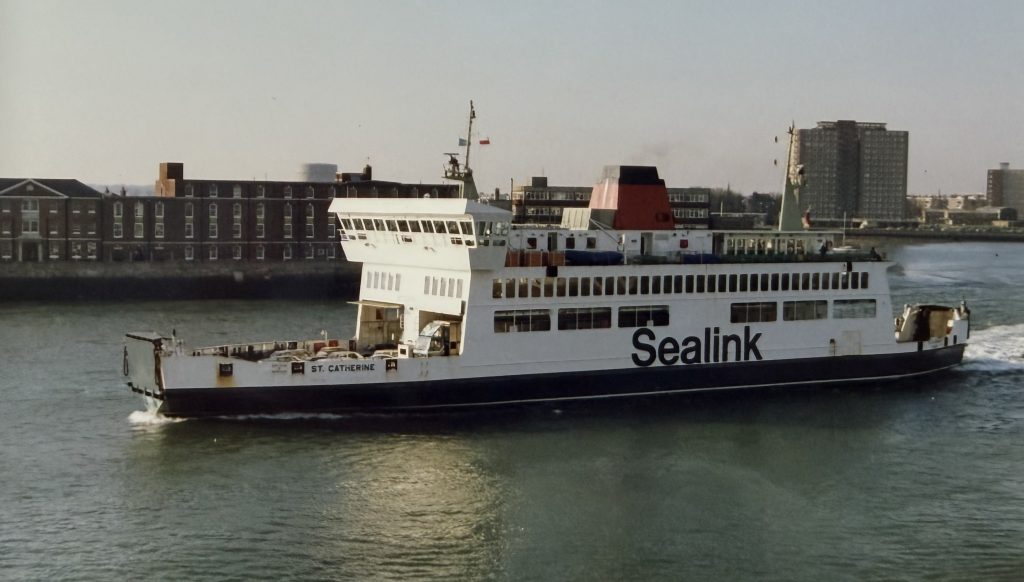
Sealink ferry St Catherine sailing in Portsmouth Harbour, showing white and blue livery with red funnel and city buildings in the background.
Image credit: Brian Smith

MV St Catherine, carrying 1,000 passengers and 142 cars, enters service in July.

In 1983, Wootton Creek’s approach channel was widened and deepened for the arrival of MV St Catherine and MV St Helen. A newly dredged holding area, known as the ‘box’, was created on the port side, allowing inbound vessels to wait while outbound ferries cleared the linkspan, saving time. Further works followed in 1989 and 1993, with later studies confirming that tidal flow and regular sailings prevented silt build-up, removing the need for maintenance dredging. – recalled by Captain William ‘Bill’ Frampton

October 1983

In 1983, former RAF pilot Richard Noble broke the World Land Speed Record at Black Rock Desert, Nevada. A regular traveller on the Portsmouth to Fishbourne route, his record-breaking car THRUST 2 was designed and built at Ranelagh Works in Fishbourne by John Ackroyd, a First Class Engineer trained at Saunders Roe in East Cowes.

Before its journey to the USA, THRUST 2 was carried from Fishbourne to Portsmouth on MV St Catherine. The car is now displayed at Coventry Transport Museum. – recalled by Captain William ‘Bill’ Frampton

November 1983

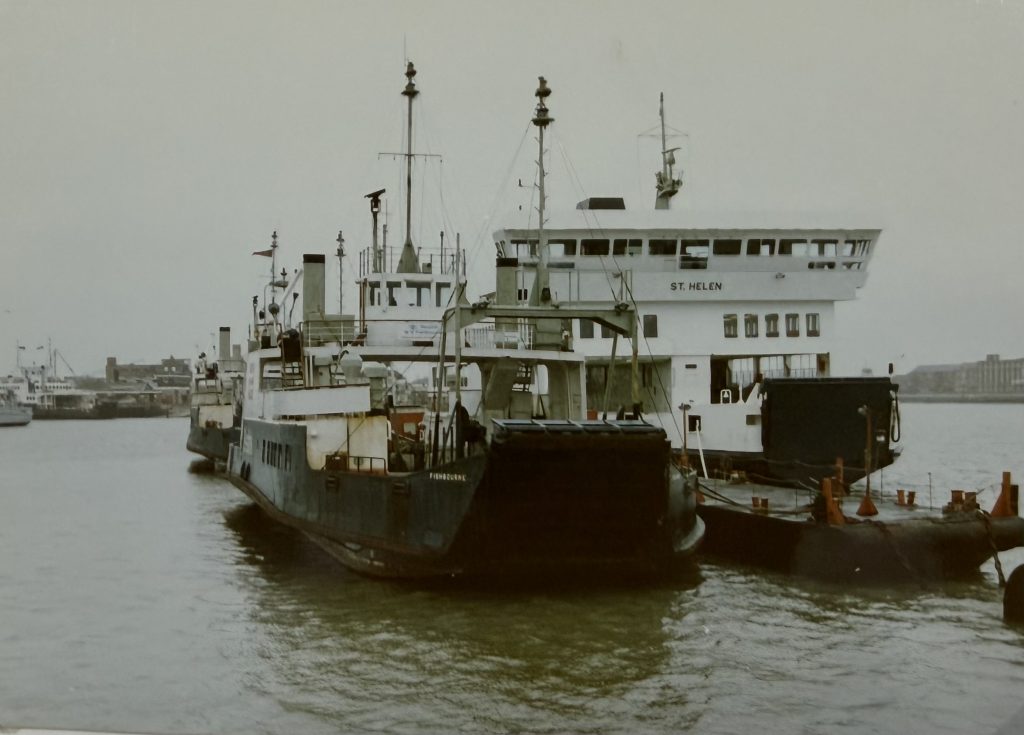
Historic ferries St Helen and Fishbourne moored side by side in harbour, viewed from the stern with loading ramps raised and city buildings in the background.
Image credit: Brian Smith

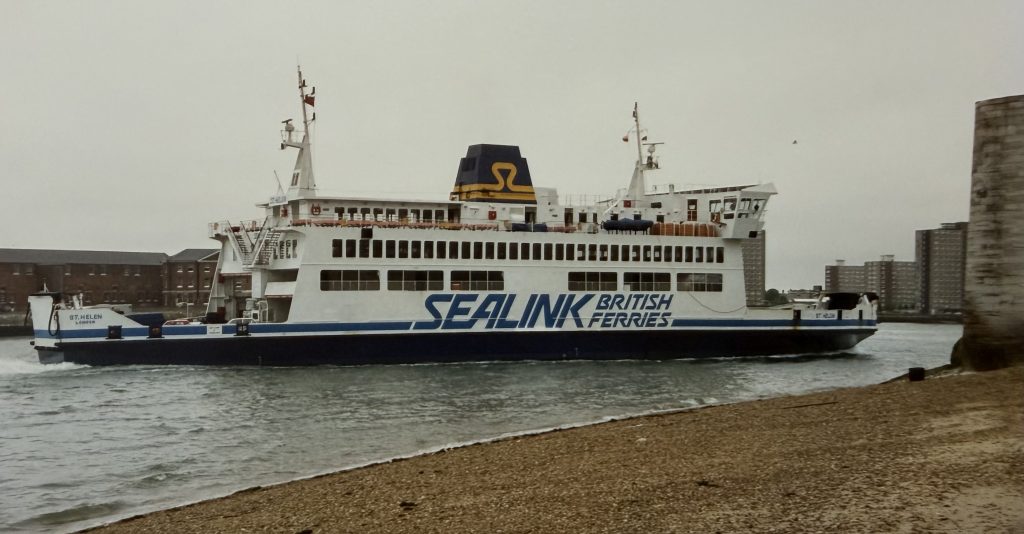
Sister ship, MV St Helen, enters service.

MV Fishbourne and MV Camber Queen are sold. MV Caedmon transfers to the Lymington –  Yarmouth route, while MV Cuthred is retained for summer service.

1984

Sealink British Ferries vessel St Helen sailing past Portsmouth shoreline, showing white and blue livery with large “Sealink British Ferries” branding on the hull.
Image credit: Brian Smith

Sealink is privatised and the new owners now trade as ‘Sealink British Ferries’.

March 1987

Sealink British Ferries vessel St Cecilia sailing in the Solent, showing white and blue livery with large branding and passengers visible on the open deck.
Image credit: Brian Smith

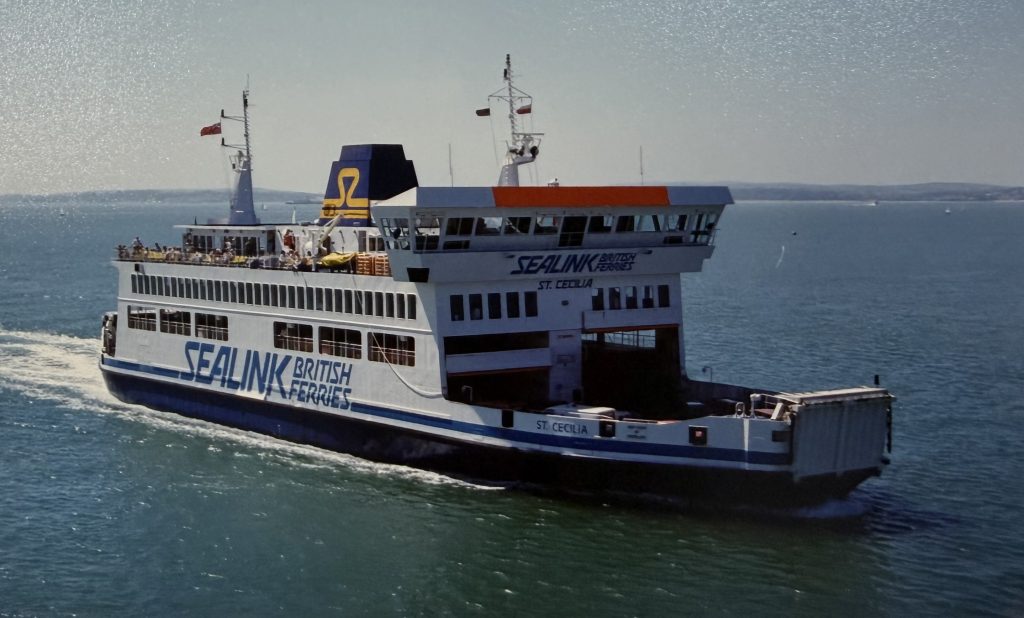
A third ferry, MV St Cecilia, enters service.

May 1987

On 13 May 1987, HM The Queen and The Duke of Edinburgh sailed from Portsmouth Harbour, pausing mid Solent off the Mother Bank to review a replica fleet of square-riggers marking the 200th anniversary of the First Fleet’s voyage to Australia in 1787. MV St Cecilia was among the assembled vessels.

After the review, HM The Queen travelled by Royal Barge to Ryde Pier Head to complete her visit to the Island. – recalled by Captain William (Bill) Frampton

1989

MV St Cecilia and the Gunwharf port are featured in an episode of the BBC1 program ‘Grange Hill’. Several scenes were filmed on board and at the port.

July 1990

Sealink British Ferries vessel St Faith nearing completion, photographed alongside the quay with branding visible on the superstructure.
Image credit: Anni Ruecroft

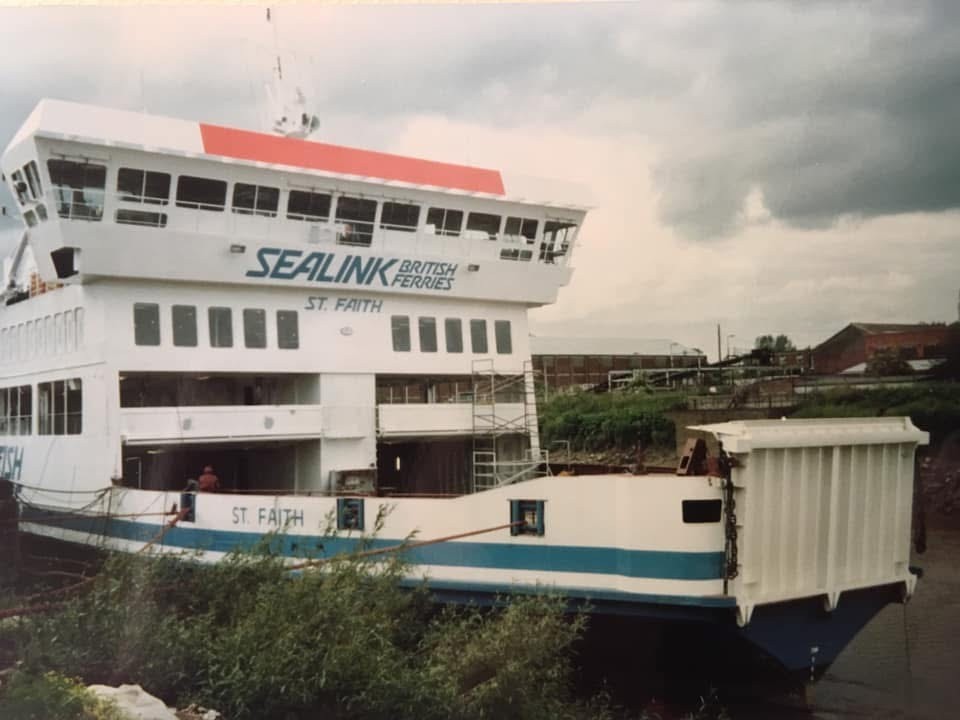
The fourth super ferry, MV St Faith, enters service.

Sealink British Ferries is acquired by Stena Line of Sweden in a takeover bid. The Sale excludes the Isle of Wight service.

November 1990

Wightlink ferry St Faith sailing past Portsmouth shoreline, showing early Wightlink branding on the white hull with city buildings in the background.
Image credit: Brian Smith

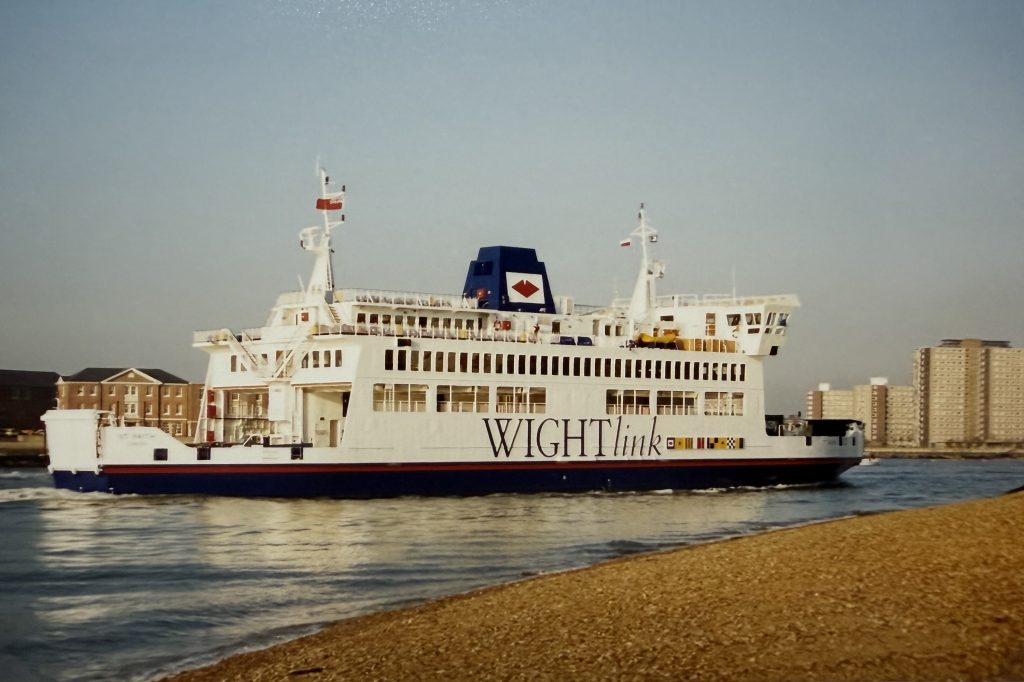
Wightlink is officially launched as a company.

When Haven Street Steam Railway extended its line from Haven Street to Smallbrook Junction, the Portsmouth to Fishbourne service transported the construction materials free of charge. Rolling stock, rails and timber sleepers were among the items carried.

The total value of this support was estimated at around £70,000 in 1990, equivalent to approximately £175,000 in 2025. – recalled by Captain William (Bill) Frampton

December 1991

In December, Karen’s relief didn’t arrive for their shift. She asked Chief Officer Shaun Adams if she needed to stay on board St Cecilia, and he let her head home. Something clicked straight away.

Karen joined Shaun’s crew in 1992, and they chatted at every opportunity.

“On Christmas Eve I went to work with a mistletoe headband, which I still have, with one goal and I got it, a kiss from Shaun” – Steward Karen Adams

They married in 2003 and have now been together for nearly 34 years.

1992

While serving as Portsmouth to Fishbourne Route Manager, the Company regularly liaised with the Police Firearms Support Unit at Netley regarding the transport of prisoners to and from the Isle of Wight prisons.

“The Police requested we hold an exercise on board to provide its fire-arms support unit the opportunity to train following an escaped prisoner aboard the vessel. The exercise ran for almost 5 hours to recapture the escaped prisoner (who was a volunteer Police Officer). The wash-up debrief after the exercise was invaluable for both the Police and the Company.” – Captain William (Bill) Frampton

March 1992

On 13 March 1992, Captain William (Bill) Frampton was informed that Margaret Thatcher would be travelling from Fishbourne to Portsmouth at 22:00.

Thatcher arrived with a police escort, was welcomed on board and introduced to the Bridge.

“She made herself very comfortable and asked if I would mind if she ‘removed her shoes’ for personal comfort.” – Captain William (Bill) Frampton

She spent the crossing in the Master’s cabin, enjoying tea and relaxed conversation.

June 1995

Sea Containers sold Wightlink to new owners. The company became privately owned and was the largest independent domestic ferry and port operator in the UK.

2001

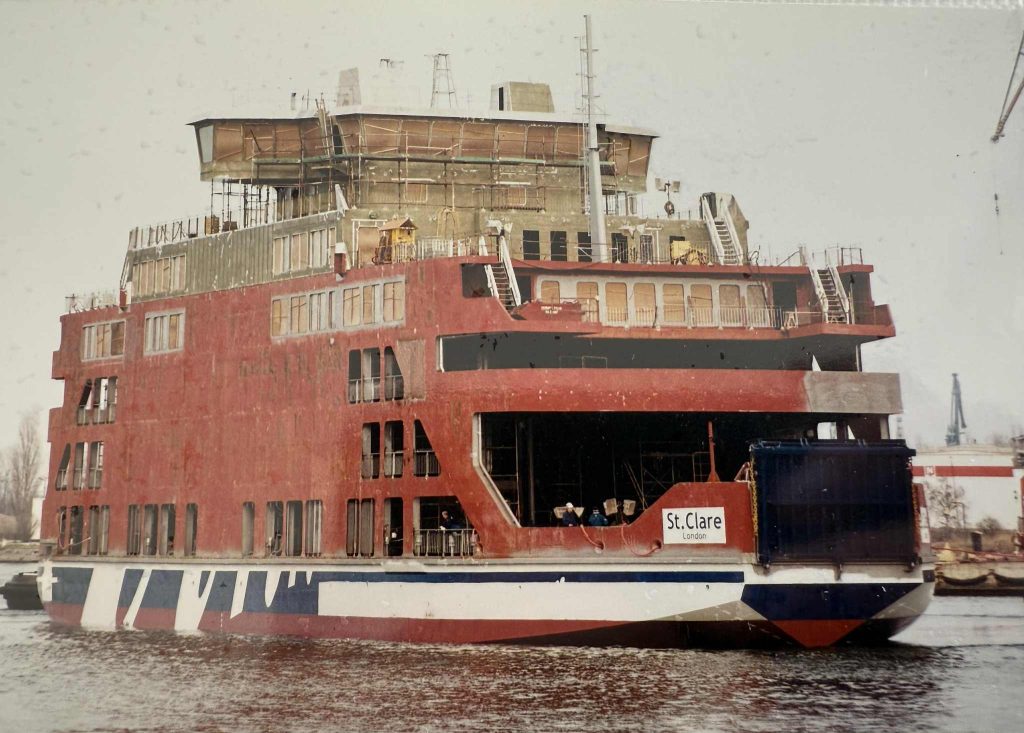
MV St Clare afloat on the water during construction, showing the red hull and unfinished upper decks with scaffolding in place.
Image credit: Ben Rue

MV St Clare enters service, carrying 878 passengers and 186 cars. The ship offers two passenger decks and three car decks.

Singer Robbie Williams filmed a music video for his song ‘Road to Mandalay’ onboard MV St Catherine in the Solent.

2002

A five-vessel service was introduced on the Portsmouth to Fishbourne route during peak summer Saturdays (mid-July to mid-September) to provide additional car carrying capacity.

MV St Cecilia featured in a French movie ‘A Loving Father’ starring Gerard Depardieu. As part of her role she was painted in the livery of the fictitious Swedish ferry company ‘Norselink’.

June 2005

The Trafalgar 200 Fleet Review in the Solent marked the 200th anniversary of the Battle of Trafalgar in 1805, with more than 160 ships from 35 nations taking part. Wightlink supported the event extensively, providing tour and transport vessels.

MV St Catherine was anchored in the Solent for the week, with barges alongside acting as a hub for Solent Cruises to transfer naval crews between ships and Portsmouth. Since WW2, there have been only three Fleet Reviews – 1953, 1977 and 2005.

“Trafalgar 200 was to commemorate the Bicentenary of the Battle of Trafalgar. The Company was significantly involved with the Royal Navy and Ministry of Defence chartering vessels and other equipment accordingly. MV St Clare was chartered to host Royalty and VIP Guests on board during the evening’s performance for the Sonrt-Lumiere Fireworks.” –  Captain William (Bill) Frampton

On 28 June 2005, Queen Elizabeth II conducted the latest Fleet Review in the Solent. The spectacle drew comparisons with 5 June 1944, when the waters were filled with vessels assembling ahead of D-Day. For those on the Portsmouth to Fishbourne route, it was a remarkable and demanding week.

One moment stood out in particular.

“Navigating on the Portsmouth – Fishbourne route was indeed challenging. And calling QHM for clearance to enter the harbour with up to 100 other eager ships and craft was a feat in itself.  I will never forget our last entry on St Helen. As we proceeded inwards, we witnessed a Red Arrows display. I swear the pilots were using us as a marker in the Bar Channel, swooping down just above funnel height. The noise was deafening, and the display was breathtaking.” – Captain Jim Blanch

2009

MV St Catherine is withdrawn from service and sold to Delcomar in Italy. She is renamed ‘MV GB Conte’ and is still running today.

2013

MV St Faith is used to film a Confused.com advert. Alongside the actors, real crew appeared in the background, including colleagues on the car deck and at the helm.

February 2014

During the Valentine’s Day storm on 14 February 2014, St Clare was forced to heave to off Fort Gilkicker for several hours before returning to Fishbourne to discharge passengers. With less windage and a greater power-to-weight ratio, St Faith later completed the crossing to Gunwharf. – recalled by Captain Jim Blanch

March 2015

MV Helen is withdrawn from service and sold to Delcomar to join her sister, MV St Catherine, in Italy. She is renamed ‘MV Anna Mur’ and is still running today.

The Wight Class vessels from Lymington all took turns to sail on the Portsmouth route as relief vessels. The first was MV Wight Light, which started after completing trials earlier that year.

2016

Work is underway to convert the service to double-deck loading. MV St Clare receives an extension to her upper car deck in her annual refit to allow for a double-deck load.

July 2017

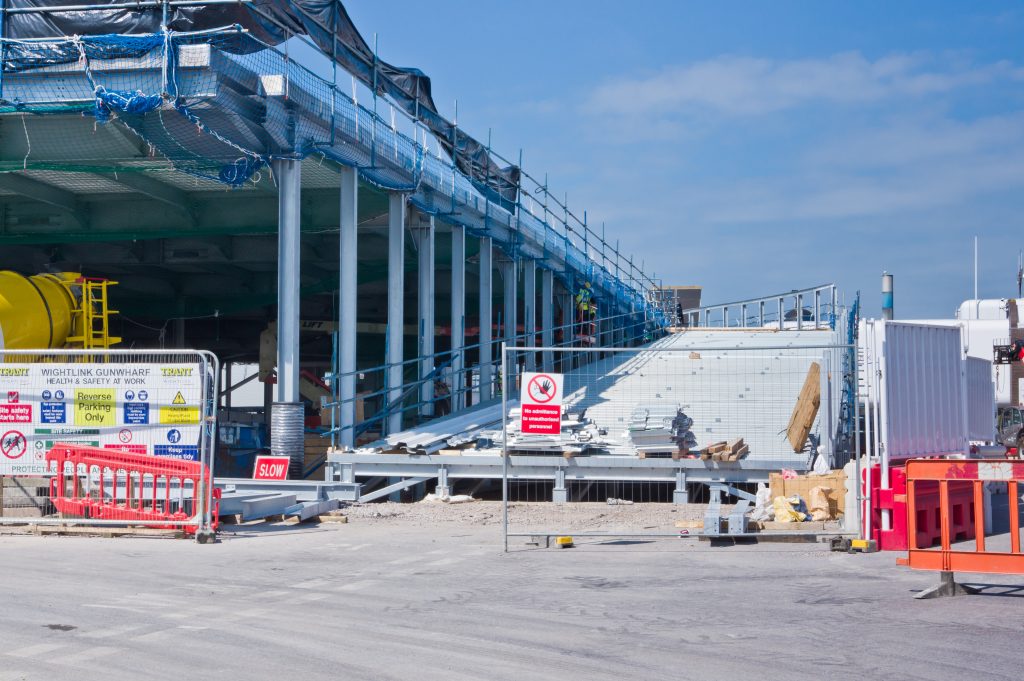
Construction work at Gunwharf showing the upper vehicle marshalling area under development, with scaffolding, safety barriers and signage in place.
Image credit: John Faulkner

As part of Wightlink’s ‘Investing in the Future’ programme, the Gunwharf port is upgraded with a new upper marshalling area, upper linkspan and customer building.

An automatic MoorMaster mooring system is introduced at both Fishbourne and Gunwharf to speed up turnaround times.

Fishbourne also gains an upper linkspan for double-deck loading and a refurbished port.

August 2018

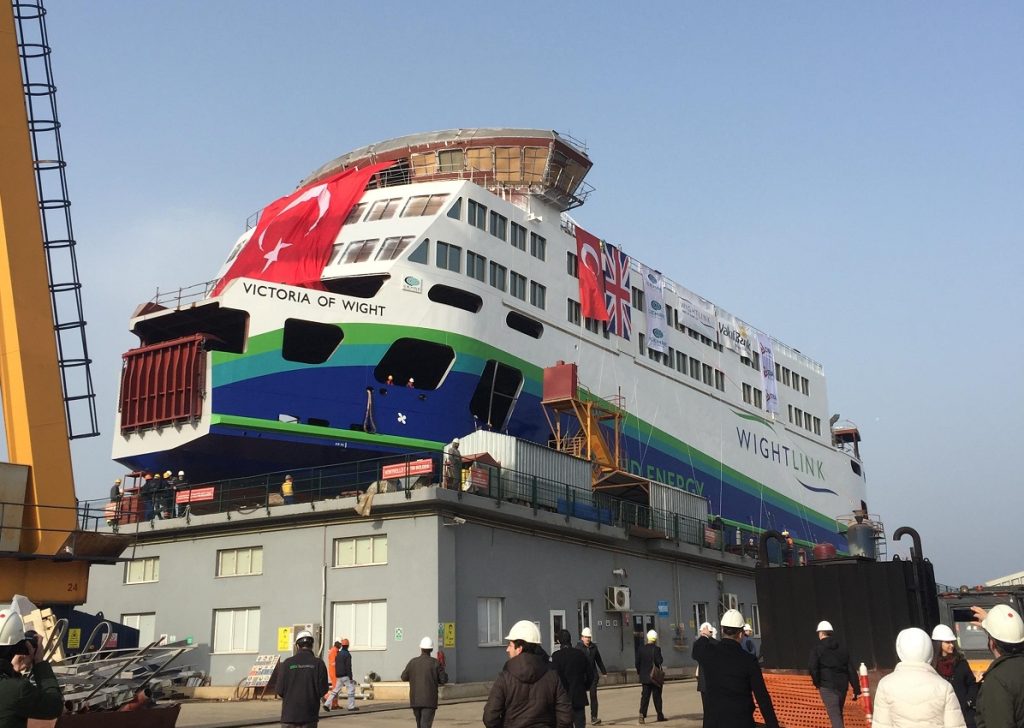
Wightlink’s hybrid ferry Victoria of Wight during launch in 2018, decorated with flags and surrounded by visitors wearing hard hats.
Image credit: John Hendy

The MV Victoria of Wight, launched by Her Royal Highness Sophie, The Countess of Wessex, entered service, with a capacity to carry up to 1,170 passengers and 178 cars.

Powered by hybrid battery technology, she uses 17% less fuel than MV St Clare and becomes the first large hybrid ferry to operate in the UK.

January 2019

MV St Cecilia is withdrawn from service and sold to Delcomar in Italy, where she joins her two sister ships, MV Helen and MV St Catherine. She is renamed ‘MV Nando Murrau’ and is still running today.

On 25 January 2019, Captain Jim Blanch had the honour of commanding St Cecilia on her final day in service, berthing her for the last time at Gunwharf. The bridge was filled with well-wishers marking the end of an era.

Having served as her Nominated Master for over a decade, he oversaw annual refits at Southampton, Portsmouth Naval Dockyard and Falmouth.

“St Cecilia was a special favourite amongst passengers and crew alike. In my opinion she was the best Saint Class. She was an absolute dream to drive and the voith wheels made a distinctive hum when you knew how to spin them fast enough when entering the camber.” – Captain Jim Blanch

March 2020

COVID-19 hits the UK and a national lockdown is announced, meaning everyone must stay at home.

Services are reduced to a two-hourly one-boat service between Fishbourne and Portsmouth for essential travel only. All other routes are suspended.

2022

All Covid-19 restrictions lifted and services return to normal.

Yolanda Stemp-Stiles named her daughter, born in 2025, Cordelia Clare Stemp-Stiles.

“My Husband [Scott] & I first met on the St Clare in 2022. He was a contractor doing some repair work on the boat. As that’s where we first met, we gave our daughter her middle name after the boat.” – Yolanda Stemp-Stiles.

In one severe Solent storm, Captain Bruce Townsend recalls that his vessel was the only one still crossing. All Portsmouth to Fishbourne car ferries had been suspended, along with other Solent services, due to the adverse weather. – recalled by Captain Bruce Townsend.

February 2022

On 18 February 2022, Storm Eunice became the fiercest storm in a quarter of a century, with record gusts of 122mph recorded at the Needles. Despite days of warnings, the storm intensified rapidly during the 10:00 sailing from Fishbourne on St Faith.

“She was due to strike from about 6am, but didn’t materialise until halfway through our 10:00 sailing from Fishbourne on St Faith. Just as we turned into the channel from the Swashway, I recall the wind shot up from a Force 7 straight to a Force 11 (Violent Storm) and then Force 12 (Hurricane 64+kts). Needless to say, I aborted the entry and we rode out the worst of it off Fort Gilkicker for the next three hours.” – Captain Jim Blanch

2026

Circular Portsmouth - Fishbourne 100 Years badge featuring a gold ferry silhouette, red ribbon and Wightlink branding in blue.

The Portsmouth to Fishbourne route celebrates its centenary.

Black and white photograph of the Fishbourne slipway, with cars queued on the ramp, wooden ferry berths on either side and shoreline buildings in the background.

Follow us on Facebook, Instagram and TikTok for more centenary celebrations throughout the month. We’re sharing Portsmouth – Fishbourne memories and key milestones regularly as we celebrate 100 years of the route.