
Follow Paul Merton’s footsteps on the Isle of Wight
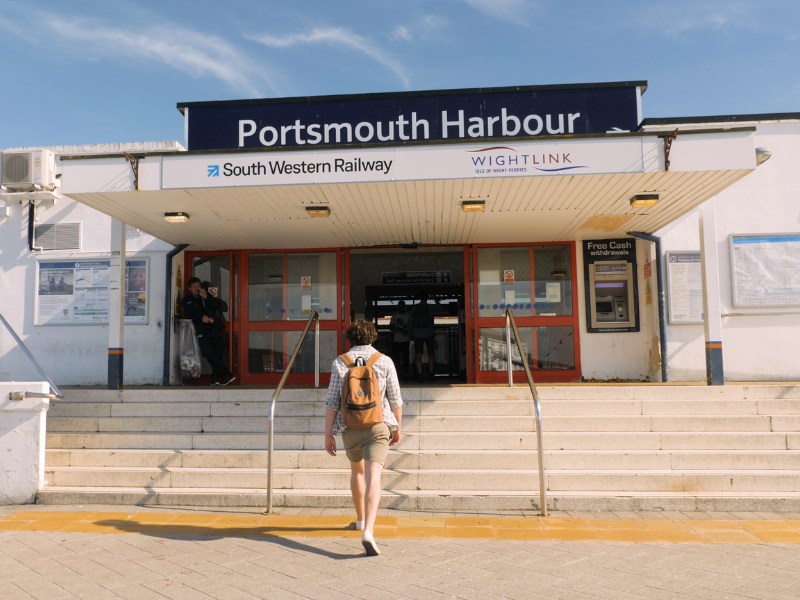
When one of Britain’s most recognisable comedians set off on his Isle of Wight adventure for Paul Merton: Driving Amazing Trains, his journey began in a way many travellers will recognise; at Portsmouth Harbour railway station.
From train to ferry to steam railway to bike, this route offers one of the most unique ways to explore the Isle of Wight. And it’s easier than you might think to follow it yourself.
Step onto Wightlink’s FastCat for a trip that blends rail, sea, trails and some of the Island’s most memorable experiences.
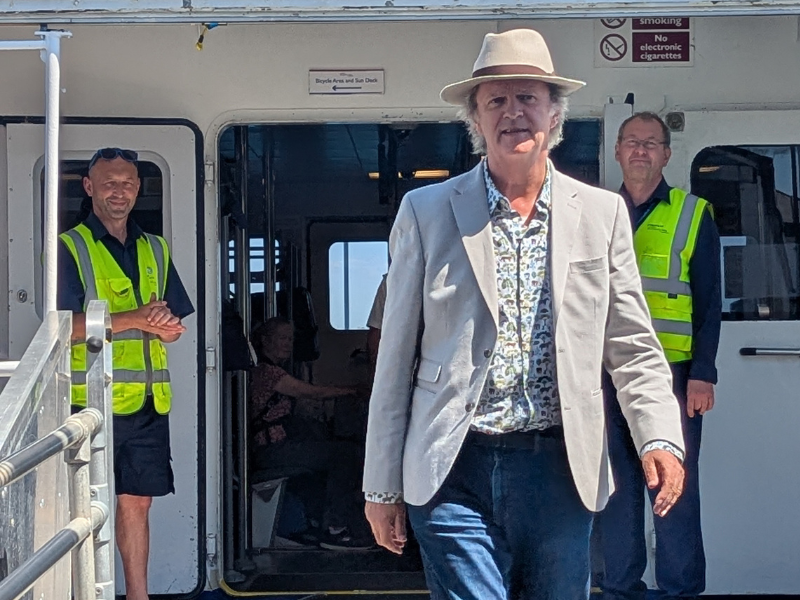
A seamless start to your Isle of Wight journey
There’s something uniquely satisfying about how effortlessly this journey begins. Within minutes of leaving the train at Portsmouth Harbour Railway Station, you’re out on the water, crossing the Solent with views stretching back towards Portsmouth and ahead to the Island. You don’t even need to leave the train station to check in for your journey with Wightlink!
Arriving at Ryde Pier Head, you’re already perfectly placed to continue your journey by rail on the Island Line.
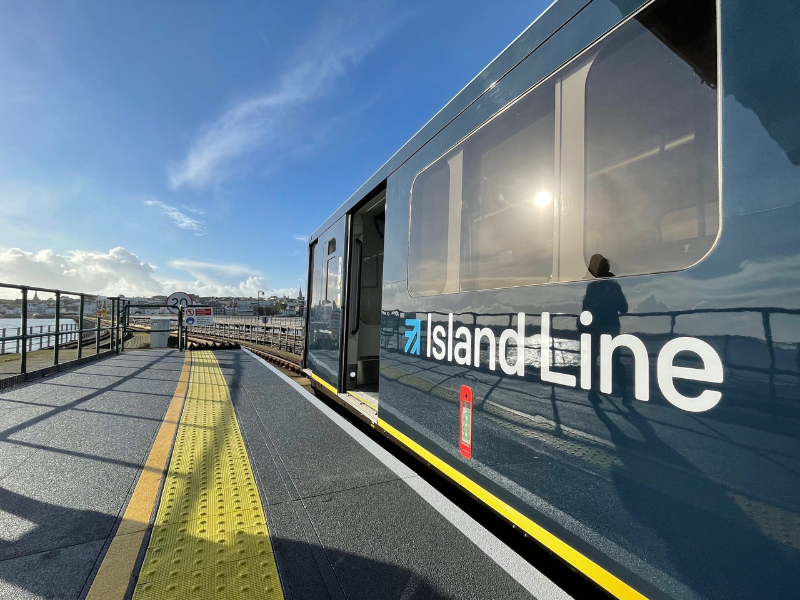
Riding the rails, Isle of Wight style
From Ryde Pier Head, Paul boarded the Island Line — a railway with a story of its own.
The trains running here once served on the London Underground, echoing Paul’s own family history and his father’s time as a tube driver. It’s a rare chance to experience a piece of London’s transport heritage, reimagined on the Island.
The journey to Smallbrook Junction is short but memorable, running along the stunning pier (the UK’s oldest and the second-longest seaside pier in the country) before heading inland.
And here’s where things get even more interesting.
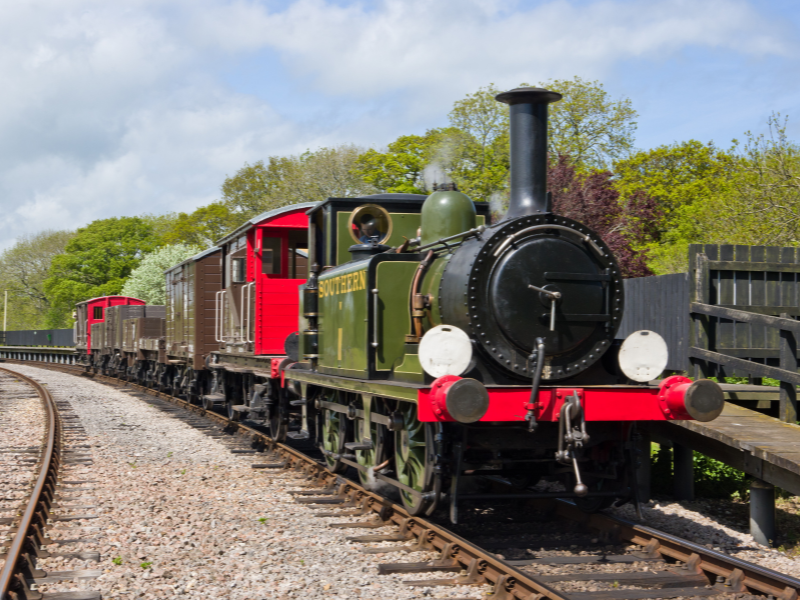
Stepping back in time at Smallbrook
At Smallbrook Junction, there’s no road access; just a platform, a passing loop and a connection to the Isle of Wight Steam Railway, so you have to arrive by train.
Here, Paul swapped modern rail for heritage steam, travelling to Havenstreet where the railway’s museum and workshops bring the Island’s rail history to life. It’s a step back into a slower, more nostalgic era of travel.

Unexpected countryside moments
After arriving at Wootton, Paul’s journey took an unexpected turn at Briddlesford Lodge Farm, where he helped welcome a newborn calf into the world with farmer Paul Griffin. It’s a reminder that the Island isn’t just about scenic views, but real working landscapes too.
Briddlesford is where Wightlink sources the milk used in its onboard cafés, connecting the journey back to the experience on board.
And while you can’t get quite so ‘hands on’ when you visit, you can say hello to the cows, stop for a scone with Guernsey butter in Briddlesford Cafe and visit the well-stocked farm shop.

Slowing the pace in nature
Halfway through his journey Paul swapped rails for two wheels, cycling on a tandem with a local guide to Alverstone Mead Nature Reserve.
The Red Squirrel trail follows disused railway lines, now been transformed into smooth, traffic-free cycle paths. Along the way, you’ll pass through beautiful landscapes from peaceful woodlands and rich wetlands to rolling farmland, all home to remarkable wildlife habitats.
There’s a bird and red squirrel viewing hide located here, so this peaceful corner of the Island is one of the best places to spot red squirrels. It’s the kind of place where you can pause, take it all in and appreciate just how varied the Island really is.
From here, Paul made his way across the Island to Cowes where he visited the Isle of Wight Model Engineering Society, a hidden gem where engineering passion comes to life in miniature.
From finely detailed locomotives to working track layouts, it’s a place that celebrates the same craftsmanship and curiosity that runs throughout the Island’s rail heritage. Keep an eye on their Facebook page for news on their open days.
It’s a fitting stop on a journey shaped by a lifelong love of trains. And a reminder that on the Isle of Wight, stories continue in all shapes and sizes.
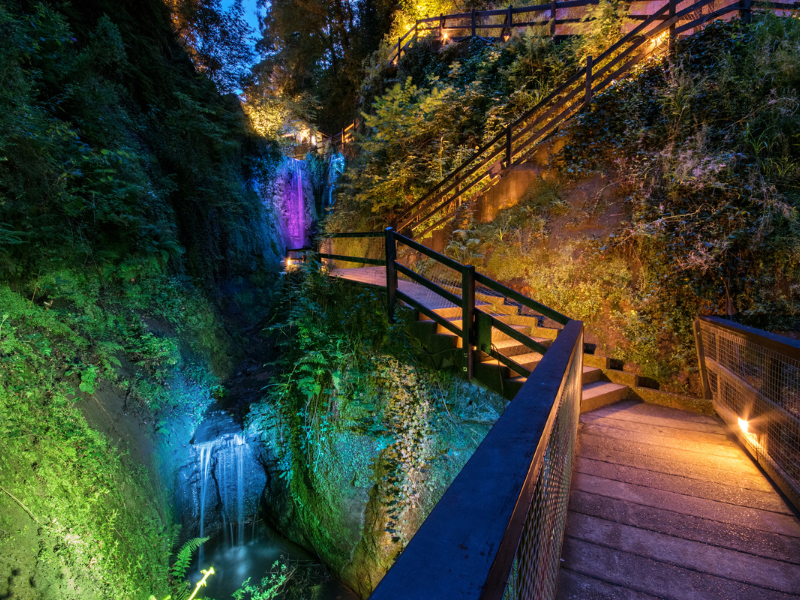
Reflections at the end of the line
Later we saw Paul re-join the Island Line and travelling to Shanklin, the end of the line. From here, he headed into Shanklin Chine, where the tone of his journey shifted. Among the waterfalls and wooded pathways, he reflected on his father’s legacy and lifelong connection to the railways. It’s a stunning place for reflection which you can enjoy too.
It’s also a place steeped in history. Meeting with a local historian, Paul uncovered the Island’s secret role during the Second World War, including the development of Operation PLUTO – a top-secret pipeline used to transport fuel beneath the English Channel to support the D-Day landings. The Island played a vital part in this extraordinary engineering effort, hidden in plain sight.
How to follow Paul Merton's Isle of Wight route
From a seamless rail-to-sea crossing to heritage railways, working farms and hidden nature spots, Paul’s journey shows just how much you can experience in a single trip to the Isle of Wight without a car.
And the best part? It all starts the same way — stepping off the train at Portsmouth Harbour and onto the ferry.
- Train from your home to Portsmouth Harbour Railway Station
- FastCat to Ryde Pier Head (you board the FastCat from within the station!)
- Island Line to Smallbrook
- Steam Railway to Havenstreet and Wootton
- Cycle the Red Squirrel Trail between Wootton and Cowes
- Island Line to Shanklin