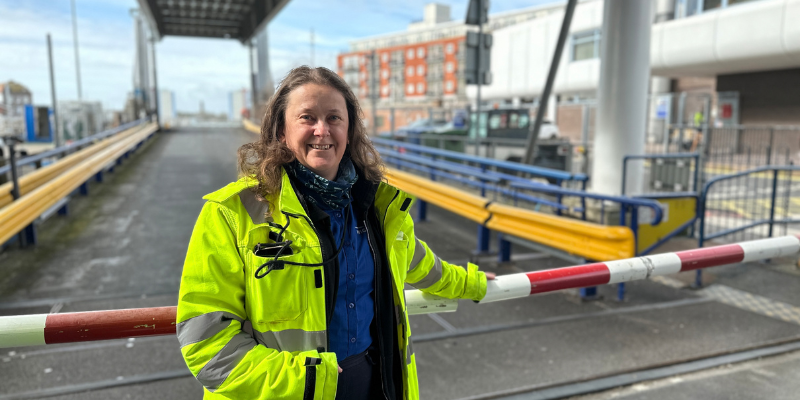
From storms to ‘bomb scares’, 25 years on the ferries – Anni’s story
To mark 100 years of the Portsmouth–Fishbourne route, we’ve been speaking to Wightlink colleagues with a deep connection to our ships and services. Their stories offer a unique, behind-the-scenes look at life on one of the Island’s most important routes.
This is Anni’s story — press play to listen to the full interview, or read the summarised version below.
My name’s Anni, and I’ve worked on the Portsmouth–Fishbourne route since March 2001. Interestingly, that means this month is also my 25th anniversary on the route, which feels quite special. Here’s my story about my time at Wightlink.
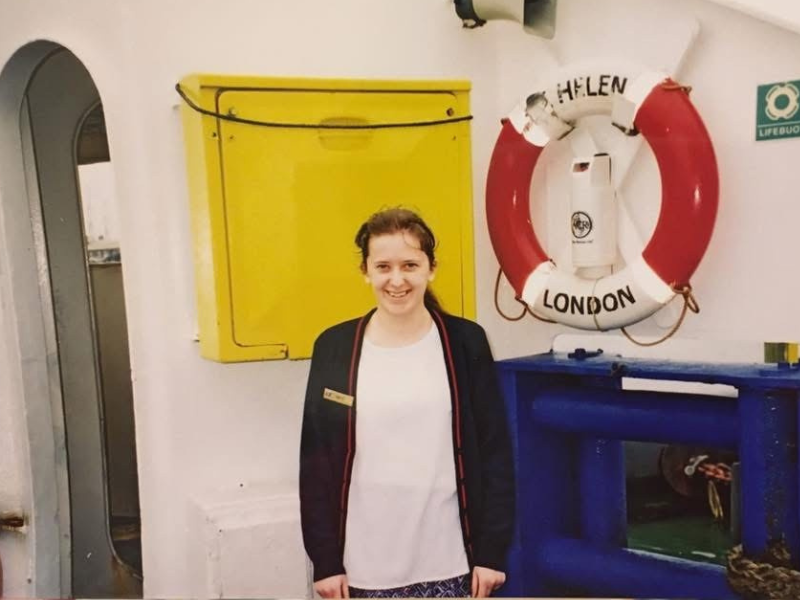
How I first joined Wightlink
It wasn’t the career path I originally imagined for myself.
At first, I was very interested in media production, especially editing. I did a course at Isle of Wight College, which went really well, and then moved on to what was then called Southampton Institute. But once I got there, I realised it didn’t really click for me. So I decided that, just for the summer, I’d explore doing something different.
I applied to Wightlink through the website and got a response back saying all the Assistant Steward roles were full, but asking whether I’d like them to keep my details on file. I said yes, although I assumed it was just a polite way of saying no and that I’d never hear from them again.
Then early in 2001, I got a letter in the post – back in the days when people still sent letters – from the passenger services team asking whether I was still interested a year later.
So I jumped at it.
I started as a Seasonal Assistant Steward in the bar (what we used to jokingly call a “trolley dolly” back then) and I loved it. The contract was only supposed to run for a few months, until about August or September.
And here I still am, 25 years later.
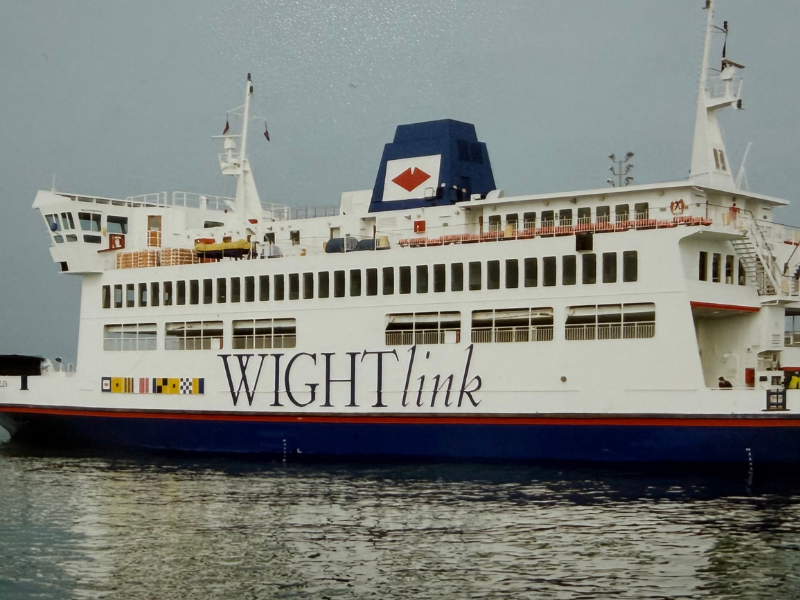
I was actually quite lucky with my timing, because 2001 was the year St Clare arrived. Suddenly there were five ships needing crews, so extra manpower was required. I happened to be in exactly the right intake at exactly the right moment.
My first days with the company
My first day working on the ferries wasn’t my first day with the company. We had a week of induction first, in the old offices in Broad Street, Portsmouth, which I believe are fancy flats now.
That week was a mixture of basic safety training, learning about lifejackets, meeting people from different departments and being talked through how things worked, what would be expected of us and what the hours would look like. We also went round and had a little tour of one of the vessels.
My first actual day on board was on my beloved St Helen. I started with Kim and Steve — Kim left some years ago, but Steve is still very much here.
And, as luck would have it, my first day happened to be stock take day. Everyone dreaded stock take. I had absolutely no idea what I was walking into. Suddenly I was counting every chocolate bar, every packet of crisps, everything that could possibly be sold. It was definitely a baptism of fire.
A childhood fascination with ships
My late dad had a huge interest in ships and shipping of all kinds, so I think some of my fascination with ferries came from him. He used to commute to London every weekday in our old Mark II Vauxhall Cavalier to his job in the Strand, where he worked as a senior manager for the Town and Country Building Society.
The ferries were part of that daily rhythm. I remember him coming home and talking about what ferry he’d travelled on that day; “oh, we were on St Helen today,” or “we went over on St Cecilia.”
So I grew up with that fascination always in the background. The ferries were just part of life, part of the family conversation, and I think that planted the seed very early on.
Why I've stayed with Wightlink so long
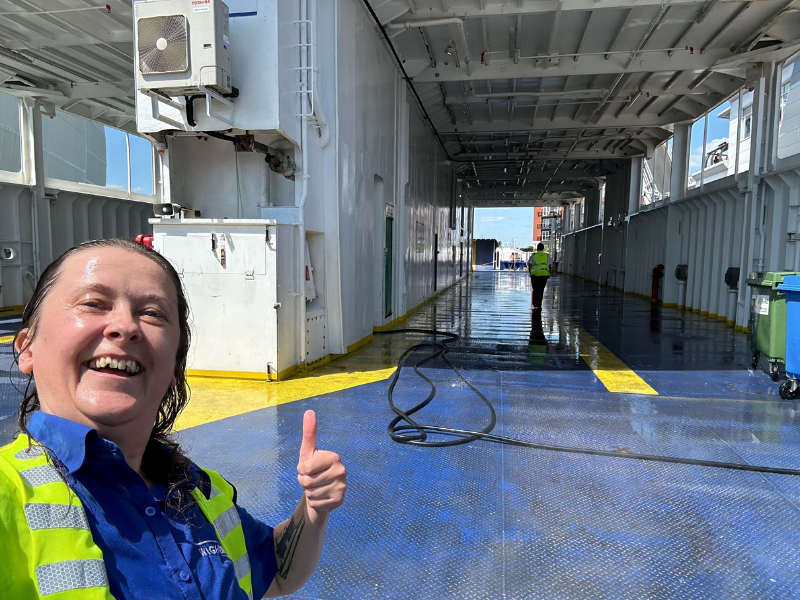
Aside from the fact I’m a self-confessed ferry nerd, there’s a real camaraderie among the staff and crews.
A lot of us have worked together for years – in some cases decades – and many of us have effectively watched each other grow up. When I started, I was known as “the baby of the team”. Now I’m 45 years old, which says a lot.
There are colleagues here who’ve just passed 40 years’ service. That kind of longevity creates a different kind of workplace. There’s history, familiarity and a sense of shared experience.
And, very practically speaking, it also pays the bills. Wightlink pays above minimum wage, which matters. I’m not arriving to work in a diamond-encrusted Lamborghini, but it’s a decent employer. It doesn’t rely on zero-hours contracts and all those other things that can make work feel insecure. That counts for a lot.
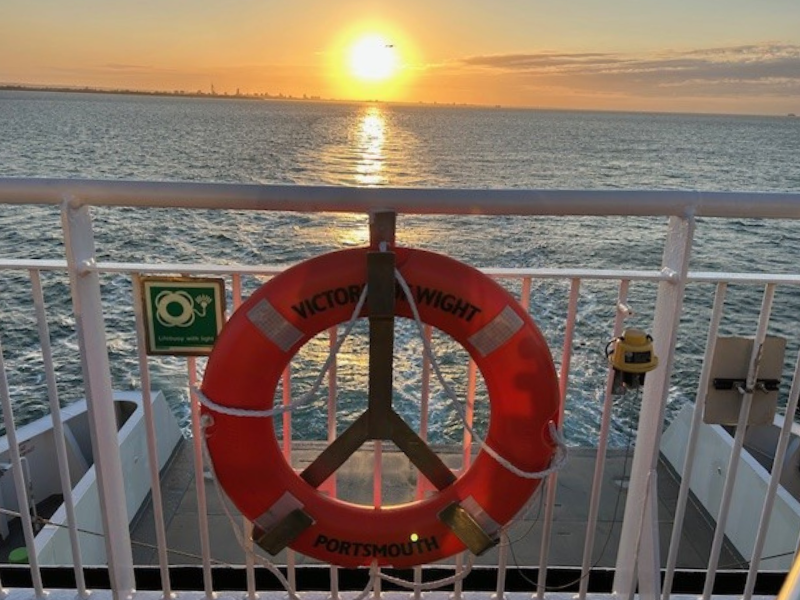
A day in the life of Anni at Wightlink
There is no such thing as a typical day.
I think a lot of people assume the ferries just pootle back and forth between Portsmouth and Fishbourne all day long and that not much really happens. But that couldn’t be further from the truth.
One day you might be dealing with one of the huge named storms — the kind where all the other operators are off and there are 100 mph winds recorded at The Needles.
The very next day could be glorious sunshine, beautiful conditions, but you’re absolutely flat out because the ship is packed and then suddenly a customer is taken ill and you go from serving coffee one minute to administering first aid the next.
Or you might spend one crossing sitting with a nervous passenger who just needs someone to talk to and help keep their mind off the journey.
So it isn’t even that every day is different – every crossing is different.
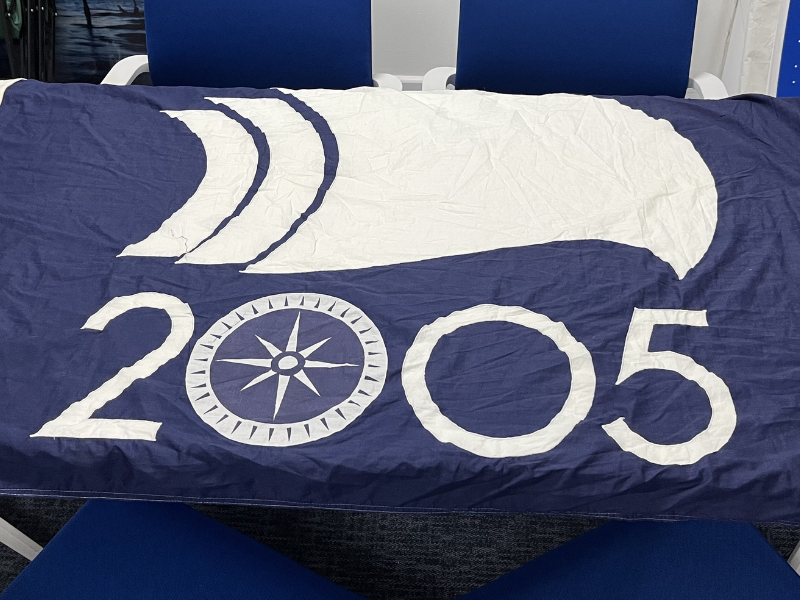
A memorable moment from 2005
The 2005 Fleet Review was extraordinary. Navy vessels from all over the world descended on the Solent, anchored themselves in formation and were all dressed. At night they were lit with beautiful fairy lights. It was an incredible sight.
I was on board St Catherine, and we were anchored right in the middle of it all as what was called the hub vessel. We had barges lashed to either side of the ship so that personnel from the visiting Navy vessels could come aboard on smaller boats, use us as a landing area and then spend time in our lounge having refreshments while they waited to head ashore.
And those smaller craft were everything you could imagine — our old FastCats Pamela and Patricia, the Gosport ferry, and pretty much anything else that could float and be chartered.
From memory, there were ships from our own Royal Navy, the US, Finland, Spain, Morocco, South Korea, Japan and, in those days of better relations, Russia.
But one of my favourite parts of the whole event was dealing with the crews from the Japan Maritime Self-Defence Force.
At the time I’d been taking Japanese lessons, so I could manage basic conversational Japanese. Some of the Japanese sailors spoke perfect English, some spoke a little, and some didn’t speak any at all. So this ended up being the only time in my life that I’ve ever interpreted another language.
Whether I did it particularly well is another question, because my Japanese was fairly rusty, but it was such a wonderful experience.
By the end of the event, I’d been given a Japanese naval flag, signed by crew members from the visiting ships. I still have it. And I remember seeing them return from leave at the end of the day, cheerfully wishing them “oyasumi nasai” — good night — as they went back, often rather merrily, to their ships.
It was unforgettable.
The suspicious package that... wasn’t
Not long after the 7 July bombings in London, also in 2005, the whole transport industry was on heightened alert for suspicious packages.
I was starting a night shift on St Cecilia. We’d just completed our first crossing to Fishbourne, unloaded the ship and I was clearing the lounges. I went up to the little upstairs gazebo lounge, where people with pets often sat, and saw what looked like a camcorder carry case left on the floor.
It was open, and there was a wire coming out of it plugged into the ship’s power socket.
So I thought, “Oh, someone’s left their camcorder charging.”
Then I looked inside. Instead of a camera, there were six misted glass balls, each with wires coming out of the top, all joined together and plugged into the power. Even at the best of times that would look suspicious. In that particular climate, it looked extremely suspicious.
I told the senior steward, who reacted much the same way I had. The captain came down and at first seemed to think we were probably overreacting… until he actually looked at it. At that point his attitude changed quite quickly.
The chief engineer isolated the power to that part of the ship. Nothing exploded, thankfully. And because the ship was empty and hadn’t reloaded yet, the decision was made to evacuate the crew and call the authorities.
So off we all got. The barriers went down. The police were called. The cars waiting for that sailing were directed to Yarmouth instead – except for one lady who refused to leave and insisted on waiting.
The police came, took one look and agreed it was incredibly suspicious. So the bomb squad was called.
Of course, the bomb squad couldn’t come directly from Portsmouth because the ferry route itself had been suspended due to the suspicious package, so there was a bit of a delay while everyone waited.
Then, about fifteen minutes later, a car came flying through the terminal gates at Fishbourne, screeched to a halt, and a man leapt out shouting:
“Oh my God, I’ve left my glow-in-the-dark juggling balls on charge!”
Before any of us had even processed what he’d said, the lady who’d refused to go to Yarmouth completely lost her temper with him. I can’t repeat what she said.
The police quickly escorted him onto the ship, where he identified the suspicious device as exactly that: glow-in-the-dark juggling balls. He was a street entertainer and had left them charging on board.
The poor man was absolutely mortified. But honestly, those things could not have looked more suspicious if they’d tried.
So yes; he managed to suspend an entire ferry service with his juggling equipment.
To this day, we still talk about Juggling Ball Man. If he’s out there somewhere, I hope he knows he’s become part of Wightlink legend.
An impromtu performance on board St Cecilia
I was working on St Cecilia, in her newly refurbished shop, with my colleague Martyn. We had a number of coach parties on board and an older lady came up to buy an ice cream.
Now, Martyn had a great sense of humour, and whenever someone bought a Cornetto he’d sing, “Just one Cornetto…” from the old advert.
This lady smiled and said, “Oh, I can do that better. I’m a retired opera singer.”
And then she did.
Right there in the middle of the shop, in full operatic voice, she burst into song and gave us the Cornetto advert as though she were at Covent Garden.
When she finished, the applause from everyone in the queue was brilliant.
Passengers like that are wonderful. You never forget them.
Looking back after 25 years
It’s been a huge part of my adult life, and I still genuinely enjoy it. I’ve always loved the ferries, I’ve always loved the people, and I think there’s something quite special about working on a route that has so much history and so much character.
No two crossings are the same. No two days are the same. There’s always another story, another challenge, another laugh, another memorable passenger, another extraordinary view.
That’s what keeps it special.